The control layer for AI-accelerated
product development
AI can generate code faster than teams can understand, review and control what becomes the product. Gardener turns fragmented files, tasks, decisions and agent work into one shared project reality.

The bottleneck is no longer code generation. It is project control.
AI agents now change products faster than teams can keep the system in their heads. Code appears quickly, but architecture, review, task continuity and trust in changes still depend on humans.
AI made code faster. Control did not scale with the same speed.
Speed increased
AI agents can generate and modify code faster than a team can reason about the product as a system.
Control did not scale
Architecture, acceptance, task continuity and confidence in changes are still held manually by people.
A new pain emerged
Context fragmentation, repeated agent onboarding, review overload and architecture drift become the real cost of AI development.
The gap between code generation speed and the team’s ability to keep the product under control is a new infrastructure problem.
Gardener turns chaotic AI development into a managed project reality
Gardener collects files, tasks, decisions, architecture and changes into a connected project substrate that humans can understand and AI agents can use.
Shared project reality
Gardener converts scattered files, chats, tasks and decisions into a connected layer of project context shared by people, teams and AI agents.
Visual system understanding
The project stops being a pile of code, diffs and messages. Humans see structure, relationships and product logic as a system.
Controlled delivery loop
Work moves through a clear loop: task, execution, review, acceptance and the next meaningful step without losing context between humans and agents.
Gardener is not another IDE feature, not a note catalog and not another AI chat. It is a living control layer for the product.
In agentic development, context becomes a software artifact
Agents do not just need more context. They need context that is structured, versioned, task-specific, grounded in the real project and tested through delivery outcomes.

Project truth
The real state of the product: code, architecture, tasks, decisions and constraints.

Task-specific context
Each agent receives only the context needed for its task, not the whole project dumped into a prompt.

Review evidence
The team can see whether the agent used the right context and what changed in the system.

Knowledge write-back
Accepted work improves the future project context instead of disappearing into a chat history.
Context quality should be evaluated by delivery outcome: did it help the agent complete the task, preserve intent and reduce review burden?
From project truth to better future context
project truth → context → execution → review → write-back
Step 1
Project truth substrate
Gardener builds a connected view of the project from files, architecture, tasks, decisions and changes.
Step 2
Agent context bundle
For each task, Gardener prepares a focused context package for the AI agent.
Step 3
Delivery execution
The agent works with the right context instead of starting from a blank prompt or reading everything.
Step 4
Review and acceptance
The result is checked against the project reality, task intent and affected areas.
Step 5
Knowledge write-back
Accepted outcomes and discovered gaps update the project memory and improve future context.
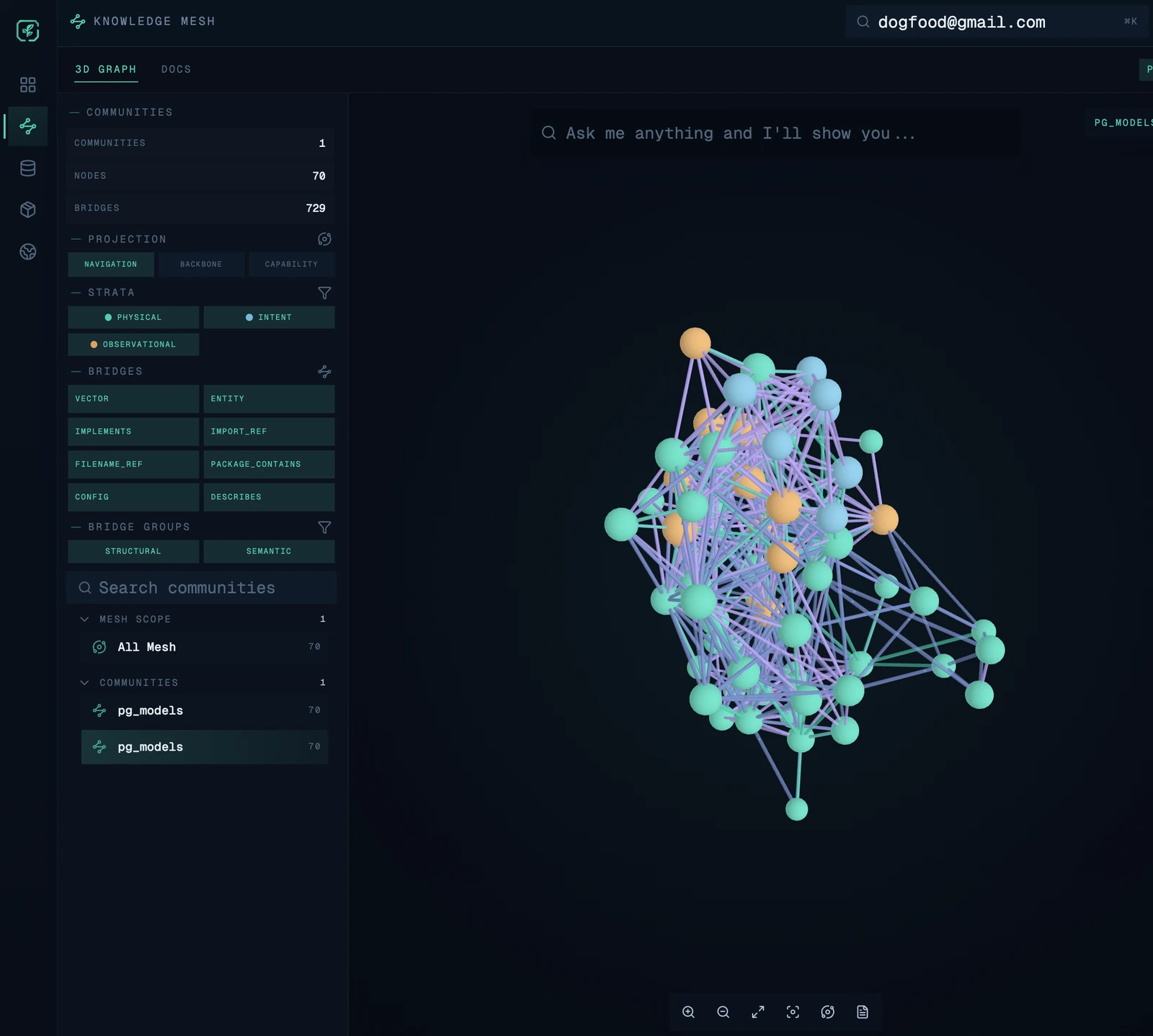
Knowledge Mesh
Gardener compiles project reality into a navigable system map. Teams can see relationships across code, architecture, and knowledge — not just isolated files or diffs.
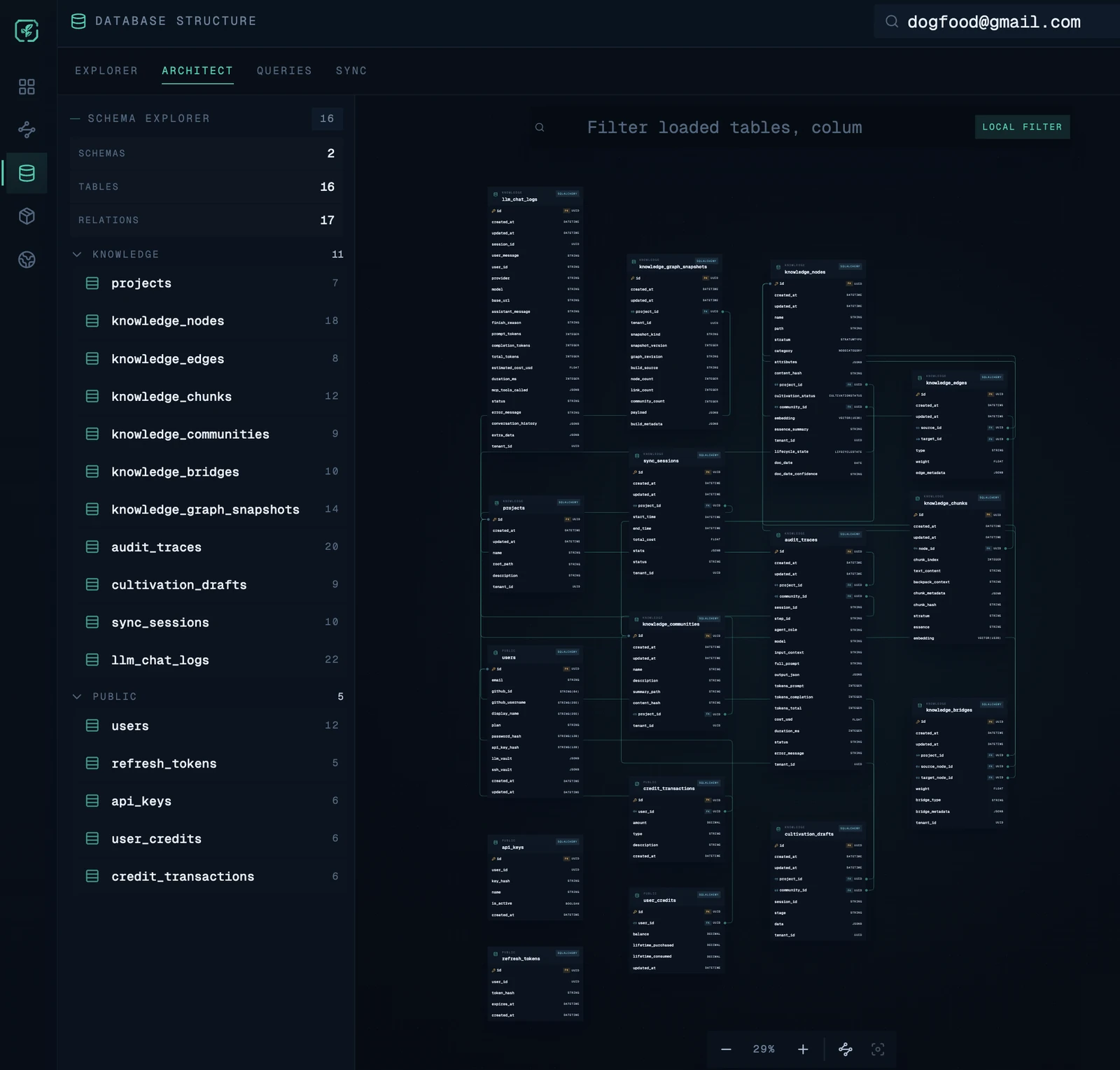
Database Structure
Gardener makes schema and system structure visible and inspectable. When data models change, teams can understand relationships, implications, and downstream impact immediately.
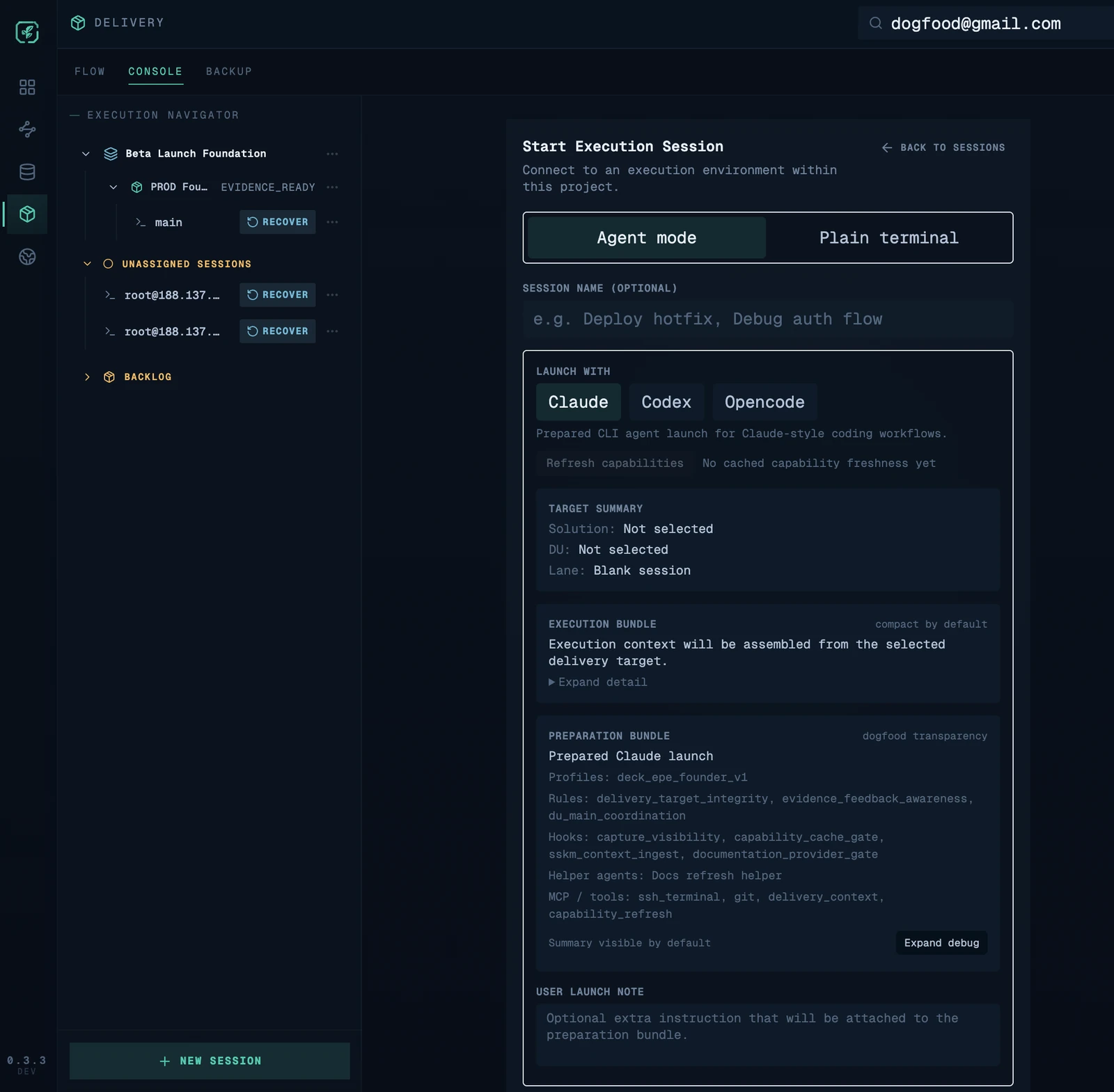
Execution Layer
Gardener helps operators bring new agents into a controlled workflow, preserve continuity across execution, and keep delivery tied to architectural intent instead of fragmented agent sessions.
Not another AI coding tool. The layer above them.
The market is full of strong tools that accelerate parts of the process. Gardener connects those layers into one managed project reality.
AI coding / IDE
Cursor · Windsurf · Copilot · Claude Code
Generation and local execution
AI app builders
Lovable · Replit · Base44 · v0
Fast product creation
Tasks and workflow
Linear · Jira · Notion
Plans, tasks and work management
Code intelligence
Sourcegraph · Greptile · Qodo · Mintlify
Code search, docs and context
Architecture tools
Eraser · AppMap · Structurizr · IcePanel
Diagrams and architecture visibility

Open category: Project Reality Layer
Gardener connects code, tasks, architecture, decisions and agent work into one shared reality — readable for humans and actionable for AI.
Built for teams and builders already hitting the AI control wall
Technical founders
You can build faster with AI, but the project becomes too large to keep in your head.
AI-native teams
Multiple agents, tools and contributors create more output than the team can review and coordinate.
Non-technical builders
AI helps you create software, but complexity returns when the prototype becomes a real product.
Agencies and small product teams
Repeated onboarding, rework and context loss destroy margin and delivery confidence.
The next market is not more code. It is control over AI-created products.
AI-native coding tools and app builders proved that product creation can move dramatically faster. But faster output creates a new need: project memory, visual system understanding, review confidence and delivery continuity.
Building with AI agents and losing project control?
Gardener is in beta. We are open to early pilots, technical design partners and investor conversations.
X: @jesus_kristich
Telegram: @Maksim_Khristich